
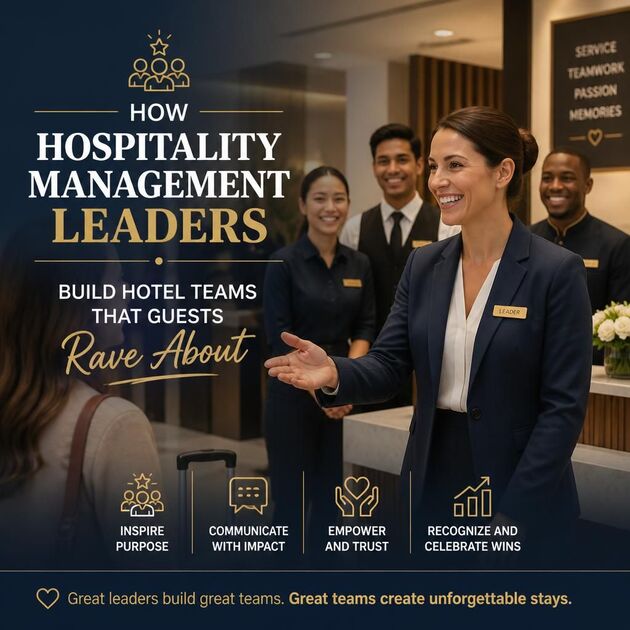
In today’s competitive travel industry, hospitality management success hinges on one powerful differentiator: motivated, engaged people. From front desk professionals to housekeeping teams, every employee directly shapes the guest experience.
Forward-thinking hotel leaders who invest in staff well-being, workforce development, and employee retention strategies see measurable returns: stronger online reviews, increased repeat bookings, and an authentic brand reputation that no advertising budget can replicate. Below are proven hospitality workforce strategies that operational leaders can implement immediately for lasting, people-first results.
The Connection Between Employee Motivation and Guest Satisfaction
A cornerstone of effective hospitality management is the direct link between hotel employee morale and guest satisfaction. Front-line staff shape every touchpoint of the guest journey; their attitude, empathy, and responsiveness define the experience far more than amenities alone. When employees feel genuinely valued, hotel staff motivation rises naturally, inspiring them to exceed expectations and craft personalized moments that build loyalty.
In luxury hospitality management, this emotional engagement becomes non-negotiable. Properties that invest in employee recognition in hotels consistently earn stronger ratings on travel platforms, improved guest experience scores, higher retention rates, and organic bookings prove that motivated teams are a hotel’s most powerful competitive advantage.
Creating a Positive Workplace Culture in Hospitality Management
A thriving workplace culture in hospitality management is the bedrock of both hotel employee retention strategies and consistent guest satisfaction. Long shifts and high-pressure demands make burnout a real threat, countered only by environments built on trust, transparency, and genuine respect. Managers who champion open communication and approachable leadership cultivate teams that perform under pressure without losing warmth.
Cross-departmental collaboration in hotels, aligning front office, housekeeping, and food and beverage towards shared service goals, sharpens operational consistency and team cohesion. For today’s younger hospitality professionals, hotel staff well-being programs and visible career development pathways are no longer perks. They are deciding factors in where top talent chooses to stay.
Recognizing and Rewarding Employee Performance
Employee recognition in hospitality management remains one of the most cost-effective performance drivers available to hotel leaders. Appreciation doesn’t demand extravagant verbal praise, hotel employee-of-the-month programs, performance certificates, and public acknowledgment; it meaningfully elevates morale and reinforces service standards.
Financial tools sharpen the impact further. Hotel performance bonus structures, attendance rewards, and guest feedback-linked incentive programs in hotel operations management create direct accountability between effort and reward. When recognition is tied to real guest outcomes, staff internalize quality as a personal standard, not just a policy.
Recognized employees naturally become internal role models, energizing team culture, inspiring peers, and setting the behavioral benchmark that every hotel staff motivation strategy depends on.
Training and Professional Development in Hospitality Management
Hospitality management training and staff development programs are no longer optional; they are operational necessities. Confident, well-trained employees handle guest challenges with composure, directly elevating service quality. Beyond technical competency, soft skills training in hotel operations, emotional intelligence, cultural sensitivity, and conflict resolution defines how guests feel throughout their stay.
Hotels that invest in the professional development of their employees experience significantly lower turnover rates and foster stronger team loyalty. Leadership development in hospitality management careers builds internal pipelines, promoting organizational resilience from within. Meanwhile, cross-departmental training in hotels enhances operational flexibility. A front desk agent fluent in housekeeping coordination communicates faster, resolves friction quicker, and delivers a seamlessly integrated guest experience.
Conclusion
In today’s competitive landscape, hospitality management has evolved far beyond operational efficiency; it is now the strategic engine behind exceptional guest experiences and sustainable growth. Hotels that invest in employee engagement, meaningful recognition, and workplace empowerment naturally build teams that deliver warmer, faster, and more personalized service.
As guest expectations continue to rise, one truth remains undeniable: exceptional service begins with genuinely motivated people. Properties that invest in employee satisfaction and retention don’t just reduce turnover; they build the kind of loyal, energized teams that turn every guest interaction into a competitive advantage.