
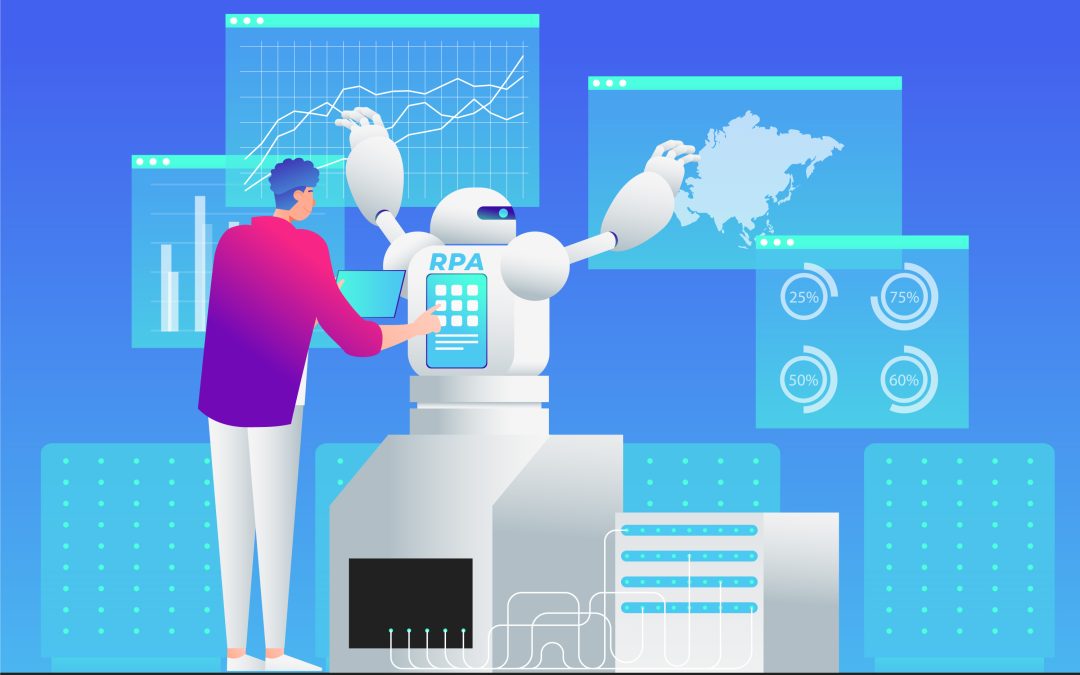
The rapid rise of artificial intelligence has transformed industries worldwide, from healthcare and finance to manufacturing, retail, and entertainment. At the center of this transformation are artificial intelligence analysts, professionals who interpret data, build intelligent models, and guide organizations toward data-driven decisions. Behind every successful AI initiative lies a powerful foundation: computing. Without advanced computing systems, the growth, scalability, and effectiveness of artificial intelligence would not be possible. Computing enables AI analysts to process massive datasets, train complex models, and deploy solutions that drive industry growth.
As businesses increasingly rely on intelligent systems to remain competitive, the role of computing in supporting AI analysts has become more critical than ever. It serves as the backbone that connects data, algorithms, and real-world applications, enabling artificial intelligence to transition from theory to practical impact.
The Relationship Between Computing and Artificial Intelligence
Artificial intelligence depends heavily on computing power. AI models require vast amounts of data and sophisticated algorithms to function effectively. Computing provides the infrastructure needed to collect, store, process, and analyze this data at high speed and scale. For AI analysts, computing environments determine how quickly models can be trained, how accurately predictions can be made, and how efficiently solutions can be deployed.
In earlier decades, limited computing capabilities restricted artificial intelligence to basic rule-based systems. Today, advances in computing hardware and software have unlocked the potential of machine learning, deep learning, and neural networks. High-performance processors, distributed systems, and optimized software frameworks now allow AI analysts to solve complex problems that were once considered impossible.
Data Processing and Management Through Computing
Data is the lifeblood of artificial intelligence. AI analysts work with structured and unstructured data from multiple sources, including sensors, social media, customer interactions, and enterprise systems. Computing systems enable the efficient management of this data. Large-scale databases, data warehouses, and data lakes rely on advanced computing architectures to handle volume, variety, and velocity.
Computing enables real-time data processing, allowing AI analysts to generate insights instantly rather than waiting for batch processing. This capability is especially important in industries such as finance, where real-time fraud detection and risk analysis can prevent major losses, and in healthcare, where timely data analysis can support life-saving decisions. Through reliable computing systems, AI analysts can focus on extracting value from data, rather than struggling with data limitations.
Model Development and Training Powered by Computing
One of the most resource-intensive tasks for artificial intelligence analysts is training AI models. Modern AI models, particularly deep learning systems, require extensive computing resources to process millions or even billions of parameters. Powerful computing environments significantly reduce training time and improve model accuracy.
High-performance computing enables AI analysts to experiment with various algorithms, fine-tune hyperparameters, and evaluate multiple model versions simultaneously. This flexibility accelerates innovation and enables faster problem-solving. As computing power increases, AI analysts can develop more sophisticated models that deliver more accurate predictions, deeper insights, and enhanced automation for businesses.
Cloud Computing and Scalability
Cloud computing has revolutionized the development and deployment of artificial intelligence. Instead of relying solely on on-premise infrastructure, AI analysts now use cloud-based computing platforms to access scalable resources on demand. This flexibility supports industry growth by lowering costs and reducing entry barriers for organizations of all sizes.
Through cloud computing, AI analysts can scale their workloads based on project requirements. During intensive training phases, additional computing power can be allocated, while resources can be scaled down once models are deployed. This approach ensures efficiency and cost-effectiveness. Cloud computing also enables collaboration across teams and geographies, allowing AI analysts to work seamlessly on shared platforms.
Conclusion
Computing is the foundation that supports artificial intelligence analysts and fuels industry growth. From data processing and model training to real-time analytics and automation, computing enables AI systems to function effectively and scale across sectors. Without advanced computing infrastructure, the rapid progress of artificial intelligence would not be possible.
As industries increasingly adopt digital transformation, computing will play an even more vital role in empowering AI analysts. Together, computing and artificial intelligence are shaping a future where innovation, efficiency, and intelligent decision-making drive sustainable industry success.